


Reference: LOPMM293
Brand: LOC/Precision
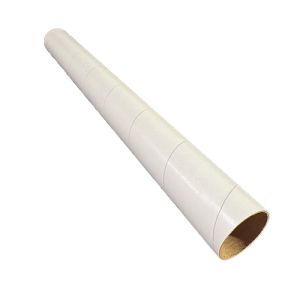
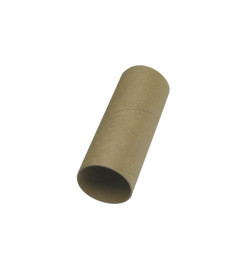
Motor mount tube 29x30 cm - LOC/Precision
Kraft cardboard tube to make 29 mm rocket motor mounts, 30 cm long.
€3.50

Reference: LOPMM293
Brand: LOC/Precision
Reference: KLPTC75S
Brand: Klima
Reference: LOPTC114
Brand: LOC/Precision
Reference: SFPSW135
Brand: Sierrafox
Reference: ACPEMATC
Brand: Sierrafox
Reference: ESMB0604
Brand: Estes
Reference: ESMC0605
Brand: Estes
Banner


Multi-engine rocket model for 24 mm engines with payload section. Carry heavy payloads aloft with a limited budget!

Secure payments: Credit Card, PayPal, Bank Transfer

Fast Shipping - We ship worldwide

Easy returns for kits and accessories
The Trident T222 is a rocket that flies with three 24 mm engines, type D, E, or even F. It is part of the Trident family by Rocketarium, which also includes its bigger "brother", a three-motors cluster as well, for 29 mm, and which takes up the design of a famous rocket from the 70s, the Enerjet 2250.
Being more than 1 meter long, this rocket is very respectable. Its payload section can carry the payload you like to a very high altitude.
The construction is simple, and the materials included in the box are, as always, of the highest quality: BT-50 and BT-70 tubes, laser-cut fins and centering disks, a robust plastic nose cone and a nylon parachute with accurately sewn shroud lines.
Multi-motor, or "cluster"
A "cluster" is a group of two or more motors, which are all turned on at the same time. The total thrust is the sum of the thrusts of each motor. Therefore, a group of small engines can lift a heavy rocket without the need to buy a larger engine.
Think about it: 3 x D12 engines are equivalent to an F36 engine, 3 x E20s are equal to a G60. Not bad at all!
Selecting different engine types allows you to fly in smaller fields, or send the model out of sight in a larger space.
Features:
To launch this rocket requires a launch pad and an electric launch controller, just like any other rocket model. But firing multiple motors at the same time is more difficult than firing a single motor. First, you need a launch controller with a battery that can supply a higher current than the usual 6 volt or 9 volt battery.
Then a 12 volt launch controller, such as the Aerotech Interlock Controller or the Estes PS II, is highly recommended, as you will be wiring three igniters in parallel. A parallel connection of three igniters requires three times the current of a single igniter. If the battery cannot supply enough current, only one motor may fire, and the rocket will follow an arcing trajectory that will almost certainly lead to a crash.
If you do not have a powerful battery or a suitable launch controller, you can use Tapematch and Stage Ignters, with just a low current starter, such as the Type A (red). Using this setup the ignition is perfect every time, even with the standard Estes launch controls. Read how to use the Tapematch and Stage Igniters on the respective product pages.
With a cluster of three 24 mm motors it is no longer possible to use a standard launch pad. The reason is simple: a cluster of three "D" motors is equal to an "F" motor, a cluster of three "E" motors is equal to a "G" motor. With these motors, and this engines configuration, a launch rail is mandatory, as a simple launch rod will flex under thrust.
Therefore, a suitable launch pad for this rocket is the same used for High Power rockets.

Data sheet
Estes: 3 x C11-5, 3 x D12-7, 3 x E12-6
TSP: 3 x D12-6, 3 x D20-6, 3 x E12-6, 3 x E20-8
Aerotech: 3 x E15-7W, 3 x E20-7W
Reference: ESPASTA5
Brand: Estes
Reference: ESPCLELC
Brand: Estes
Reference: KLMTAPEM
Brand: Klima
Reference: KLMSTAIG
Brand: Klima
Multi-engine rocket model for 24 mm engines with payload section. Carry heavy payloads aloft with a limited budget!
check_circle
check_circle


